
Fragrance-free, unscented and hypoallergenic: how to read a skincare label
Tuesday 10th November 2026
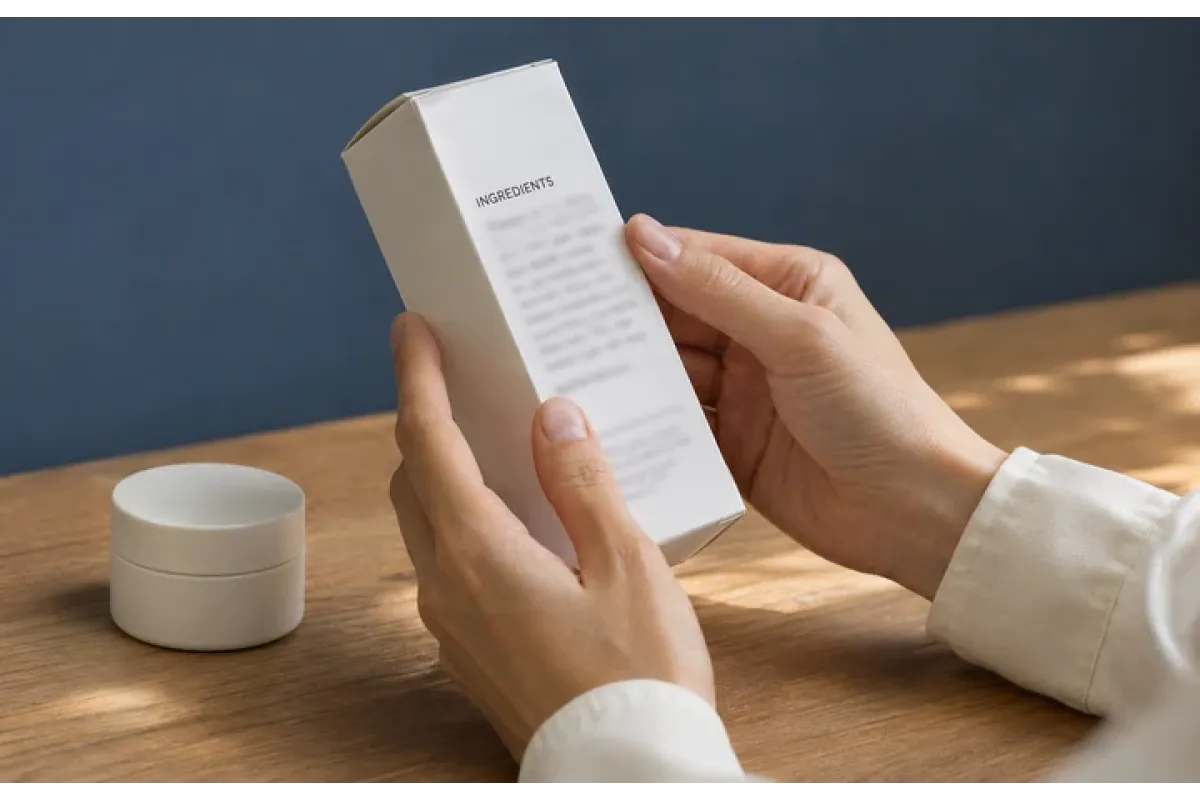
Fragrance-free, unscented and hypoallergenic are different claims. If you want to avoid added fragrance, look for an explicit fragrance-free statement, then check the current ingredients and the product's purpose. A mild smell alone cannot establish the formula, and no label guarantees that every person will tolerate a cosmetic.
You may enjoy scented skincare, prefer a quieter routine or have been advised to avoid particular ingredients. In each case, reading the label carefully is more useful than relying on the strength of the smell. The aim is to choose a product that meets your actual need and your personal requirements, without replacing everything in the bathroom at once.
What do the different words on the pack tell you?
A fragrance-free claim concerns the addition of fragrance. Unscented describes the scent experience and can involve ingredients that mask other smells. The American Academy of Dermatology draws attention to this distinction when advising on dry-skin care. AAD guidance on fragrance-free and unscented products
| Label wording | How to use it when choosing | What still needs checking |
|---|---|---|
| Fragrance-free | A useful starting point if you want to avoid added fragrance | The full formula and your known sensitivities |
| Unscented | It may have little noticeable smell | Whether fragrance-related ingredients are present |
| Hypoallergenic | A manufacturer's claim about the product | Individual tolerance and any ingredients you need to avoid |
| For sensitive skin | The intended audience | Whether the exact version is fragrance-free |
| Natural or botanical | Information about the formulation approach | The actual ingredients, including aromatic plant ingredients |
Hypoallergenic does not mean that an allergic reaction is impossible. FDA consumer guidance on cosmetic safety Treat the wording as information to investigate, rather than as a substitute for reading the pack.
When is a fragrance-free option worth considering?
It can be a clear shopping preference when you dislike scented products or want fewer competing aromas in your routine. If a clinician has identified a sensitivity, use the specific avoidance advice you were given. A broad category label cannot replace an individual list of ingredients to avoid.
There is no need to assume every scented cosmetic is unsuitable for everyone. Equally, a pleasant scent says little about how your own skin will respond. Think about why you want to change a product: personal preference, a concrete ingredient requirement or a current problem that needs professional advice. These lead to different buying decisions.
How to read the ingredient list without guessing
- Confirm the exact name and version. A familiar brand, similar tube or the word “sensitive” is not enough to identify a formula. Compare the product name and size with the pack you will receive.
- Read the complete ingredient list. Look for Parfum or Fragrance, but do not treat the absence of those words as proof of every property you need. Check any ingredients you already know you must avoid.
- Use the manufacturer's statement. If the claim or the role of an ingredient is unclear, ask about that exact product. A botanical name on its own does not explain all the ingredient's functions.
- Keep the intended use in view. A fragrance-free mask, shampoo and moisturiser still do different jobs. Choose for the task and follow the relevant directions.
The FDA advises careful ingredient checking and contacting the manufacturer if fragrance information is unclear. FDA information on fragrances in cosmetics An online list is useful for comparison; read the current packaging too, because formulas can change.
A product may have a raw-material scent without an added perfume composition. Smelling a tester can tell you whether you enjoy using it, but it cannot replace the ingredient list or answer an allergy question. Record the exact product details when asking for help, rather than describing it only as “the white cream”.
Two specific examples from Wellness Expert
Epionce Intense Recharge Mask, 50 g: an optional face-mask step
Epionce Intense Recharge Mask, 50 g is a clay-based facial mask whose manufacturer explicitly identifies it as fragrance-free. Epionce formula and directions
Consider it if you want an occasional mask for a more radiant-looking complexion and added fragrance is one of your exclusion criteria. That combination of purpose and stated formula is the reason it fits this guide. It is not a reason to add a mask when you have no need for one.
The ingredient list includes botanical extracts. This makes it a useful reminder that fragrance-free does not mean a formula contains no plant ingredients. Compare the whole list with your own requirements, and follow the specified application and rinse-off directions. Do not extend contact time simply because the product is fragrance-free.
Keune Scalp Sensitive Soothing Shampoo, 300 ml: a cleansing choice
Keune Scalp Sensitive Soothing Shampoo, 300 ml is a shampoo for a sensitive-scalp routine. Keune describes this Scalp Sensitive formula as fragrance-free. Keune product information
Why consider it: it combines a defined cleansing purpose with an explicit fragrance-free statement, useful when you want to avoid added fragrance in a hair-washing product. Check the exact Scalp Sensitive name. The older Derma Sensitive product should not automatically be assumed to have the same composition.
Use it as a shampoo according to its directions, then assess how comfortable the routine feels. It cannot identify the cause of persistent scalp symptoms. These two examples address separate needs; there is no requirement to buy both or rebuild a complete routine around them.
Before using a new product widely
Introduce one new product at a time so you can keep track of what changed. Dermatologists recommend trying skincare on a small area before broader use. AAD advice on testing skincare products Follow the product's intended frequency and contact time: a rinse-off product should not become an overnight treatment for the sake of a home trial.
A home use trial cannot establish that you have no allergy, and it does not replace medical patch testing. If you have a diagnosed allergy, follow your clinician's advice before trying a new formula. Stop using a product that produces a reaction and seek medical advice for persistent or significant symptoms.
Frequently asked questions
Does fragrance-free always mean there is no smell?
No. Raw materials can have their own scent. To understand the formulation, check the manufacturer's claim and the ingredients, rather than relying on your nose alone.
Can a natural cosmetic contain fragrance?
Yes. A natural or botanical description does not itself say that added fragrance is absent. Read it alongside the specific fragrance claim and the ingredient list.
Should I replace every product labelled “sensitive”?
Start with your actual requirement and what already works comfortably. If you need to avoid fragrance, verify each relevant product. Buying a matching line is not a substitute for checking individual formulas.
Does dermatologist-tested guarantee that a product will suit me?
No. A testing claim does not predict every individual's response. Keep the intended use, full composition and any personal avoidance advice together when deciding.
Before your next purchase, write down the task, the exact product version and any ingredient requirements. This turns a broad search for “gentle skincare” into a comparison you can actually use. Fragrance-free can be a helpful criterion, alongside the other features that make a product appropriate for you.
Mila Serani, Skincare & Beauty Editor at Wellness Expert